For businesses—from retail stores and office parks to industrial facilities and shopping malls—parking lot lighting is more than just a utility: it’s a critical investment in safety, customer experience, and operational efficiency.
In an era of rising energy costs, stricter sustainability regulations, and growing demand for cost-effective solutions, solar street lights have emerged as the smart, future-proof choice for businesses worldwide.
Below’s a detailed breakdown of why solar lighting outperforms traditional grid-powered options, tailored to the core priorities of business owners and facility managers:
1. Slash Operational Costs: From "Expense" to "Investment"
Businesses are constantly seeking ways to reduce overhead—and parking lot lighting is a major, often overlooked, cost center. Solar street lights eliminate two of the biggest financial burdens: electricity bills and high installation costs.
- Zero Electricity Costs: Solar lights harness free, renewable sunlight to power operations, cutting out monthly utility expenses entirely. For a mid-sized business with a 5,000 sq. ft. parking lot (requiring 10–15 lights), grid-powered lighting can cost $500–$1,000/month in electricity. Solar lights eliminate this recurring cost, saving $6,000–$12,000 annually—funds that can be reinvested in core business activities.
- Low Installation & Infrastructure Costs: Traditional lighting requires trenching, wiring, and connection to the municipal grid—costly and time-consuming (often $2,000–$5,000 per light in labor and materials). Solar lights are standalone systems: no wiring, no dependency on grid access, and installation can be completed in hours (not days). For businesses in remote areas or new developments (where grid access is limited), solar is not just cheaper—it’s often the only feasible option.
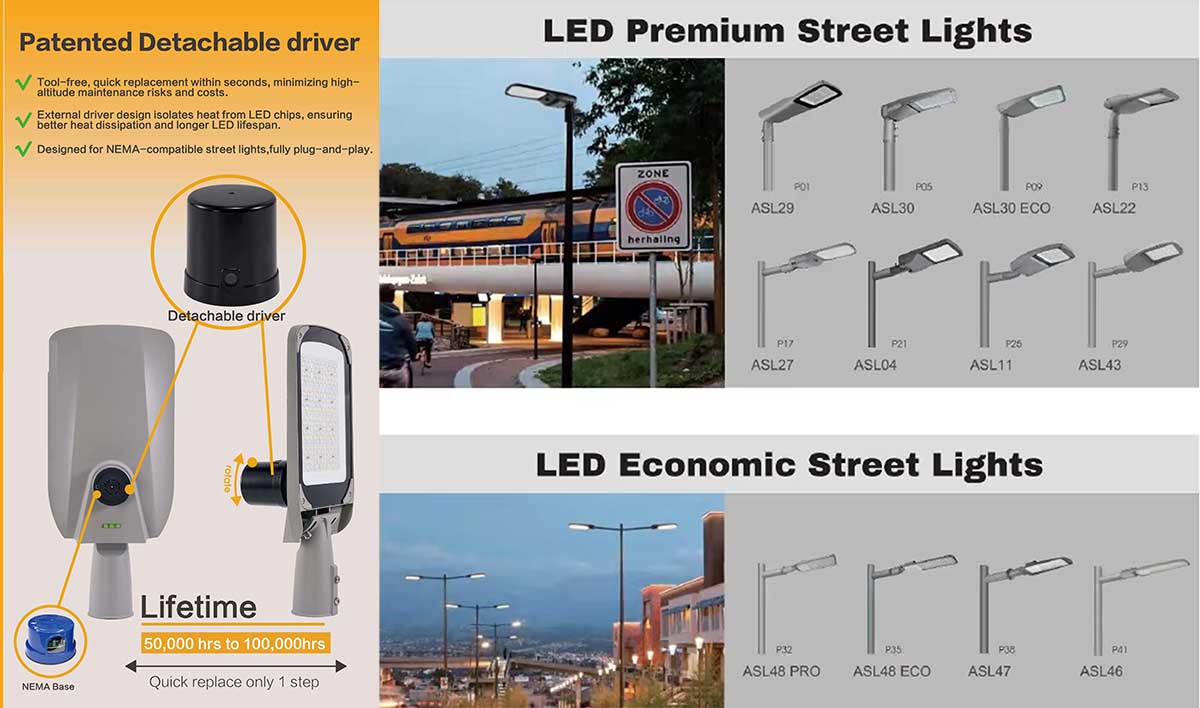
- Minimal Maintenance Costs: Modern solar street lights use durable components: LED bulbs (lifespan ≥50,000 hours, or 5–8 years), LiFePO4 batteries (3,000+ cycles, 5–7 years), and weather-resistant housings. This translates to minimal replacements or repairs—far less than traditional lights (which require bulb changes every 1–2 years and wiring maintenance). Most solar systems come with 2–5 year warranties, further reducing risk.
- Fast ROI: Despite a higher initial investment, solar lights typically pay for themselves in 2–3 years (thanks to energy and maintenance savings). After that, they generate "free" lighting for decades—an unbeatable long-term value for businesses focused on profitability.
2. Enhance Safety & Security: Protect Customers, Employees, and Assets
A well-lit parking lot is non-negotiable for businesses: it deters crime (theft, vandalism, assault) and reduces liability risks (slip-and-fall accidents). Solar street lights excel in safety due to their reliability, brightness, and smart features.
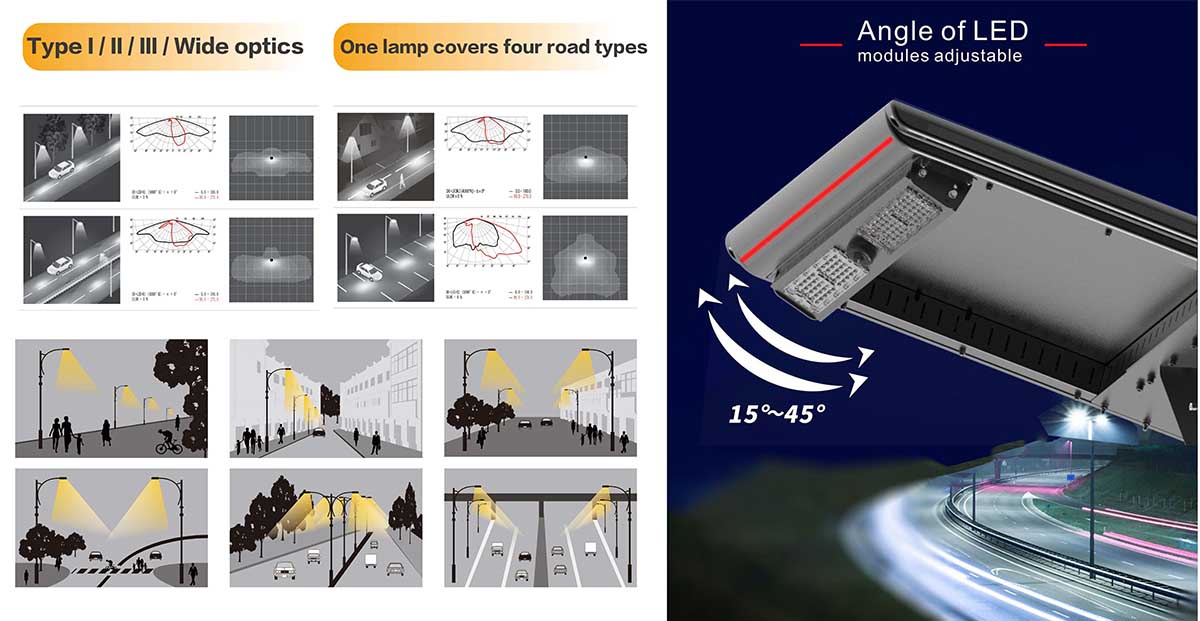
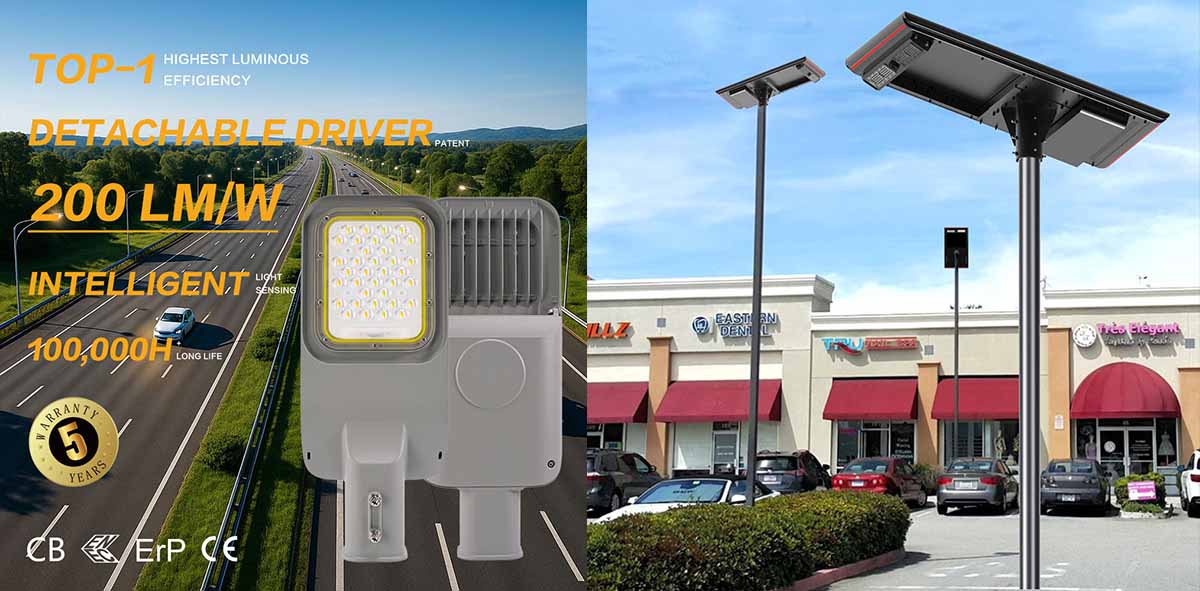
- Consistent, Bright Illumination: Solar LED lights deliver high luminous efficacy (≥130lm/W) and uniform light distribution—eliminating dark spots that attract criminal activity. Choose color temperatures of 4000K–5000K (natural white) for maximum visibility: this light temperature mimics daylight, making it easier for customers and employees to navigate, read signs, and identify potential hazards.
- Uninterrupted Performance (Even During Power Outages): Grid-powered lights fail during blackouts—leaving parking lots vulnerable. Solar lights store energy in batteries, ensuring 24/7 operation (with 3–7 days of backup power for rainy/cloudy weather). This is critical for businesses that operate late (e.g., restaurants, retail, warehouses) or in regions with frequent power outages (e.g., Southeast Asia, Africa, parts of Latin America).
- Smart Security Features: Many commercial-grade solar lights integrate motion sensors, which boost brightness (from 30% to 100%) when movement is detected. This not only saves energy but also alerts potential intruders that the area is monitored. For industrial facilities or large parking lots, add IoT connectivity for remote monitoring: track light status, adjust brightness, or set schedules via a smartphone app—enhancing control and security.
3. Boost Brand Image & Meet Sustainability Goals
Today’s consumers and investors prioritize businesses that act responsibly. Solar lighting is a visible, impactful way to demonstrate your commitment to sustainability—while complying with global environmental regulations.
- Eco-Friendly Credentials: Solar lights produce zero carbon emissions and reduce reliance on fossil fuels. A single 30W solar light replaces a 100W traditional bulb, saving ~800kg of CO2 annually. Highlight this in marketing materials, signage, or social media: 73% of consumers are more likely to support brands that prioritize sustainability (Nielsen report).
- Compliance with Global Regulations: Many countries and regions have strict sustainability mandates for businesses. For example:
- EU: The Green Deal requires businesses to reduce carbon footprints—solar lighting helps meet ESG (Environmental, Social, Governance) targets.
- US: Tax incentives (e.g., Investment Tax Credit, ITC) cover up to 30% of solar project costs for businesses.
- Southeast Asia: Countries like Singapore and Malaysia offer grants for green building initiatives—solar parking lot lighting qualifies for these incentives.
- Attract Eco-Conscious Customers & Talent: A sustainable business model appeals to millennial and Gen Z consumers (who make up 60% of global buyers) and top talent. A well-lit, solar-powered parking lot sends a clear message: your business is forward-thinking, responsible, and invested in the community.
4. Flexibility & Scalability: Adapt to Any Business Need
Businesses come in all sizes—and solar lighting systems are highly customizable to fit parking lots of any shape, size, or location.
- No Grid Dependency: Whether your business is in a bustling urban area (where grid connection is expensive) or a rural location (where grid access is unavailable), solar lights work anywhere there’s sunlight. This is ideal for expansion: if you add more parking spaces, simply install additional solar lights—no need to rewire or upgrade the grid.
- Customizable Designs: Choose from a range of styles (sleek modern, industrial, decorative) to match your brand aesthetic. For retail stores or hotels, opt for decorative solar lights that enhance curb appeal; for industrial facilities, prioritize heavy-duty, high-lumen models for maximum coverage.
- Adjustable Operating Modes: Tailor lighting to your business hours: set lights to run 8 hours/day (for offices) or 12 hours/day (for 24/7 warehouses). Use dimming modes during low-traffic hours (e.g., 2–6 AM) to save battery power without sacrificing security.
5. Durability & Longevity: Built for Commercial Use
- Weather Resistance: Most commercial solar lights have an IP65+ rating (waterproof, dustproof) and can operate in extreme temperatures (-20°C to +65°C). They’re resistant to rain, snow, wind (up to 120km/h), and UV radiation—perfect for businesses in any climate (from hot deserts to cold northern regions).
- Rugged Materials: Housings are made from aluminum alloy or stainless steel—corrosion-resistant, impact-resistant, and difficult to vandalize. Unlike plastic fixtures (which crack or fade), metal housings retain their integrity for decades.
- Long Lifespan: With LED bulbs and LiFePO4 batteries, solar lights last 10–15 years—far longer than traditional lights (5–7 years). This reduces replacement costs and downtime, ensuring your parking lot stays lit without frequent maintenance.
Why Solar Beats Traditional Lighting for Businesses: A Quick Comparison
| Factor |
Solar Street Lights |
Grid-Powered Lights |
| Electricity Costs |
$0/month (free solar energy) |
$500–$1,000/month (recurring expense) |
| Installation |
Fast, no wiring ($500–$1,000 per light) |
Slow, costly trenching ($2,000–$5,000 per light) |
| Maintenance |
Minimal (bulb/battery replacement every 5–7 years) |
Frequent (bulb changes every 1–2 years) |
| Reliability |
Uninterrupted (backup power for outages) |
Fails during power outages |
| Sustainability |
Zero emissions, ESG-compliant |
Relies on fossil fuels, high carbon footprint |
| Scalability |
Easy to expand (add lights as needed) |
Requires grid upgrades for expansion |
Final Thought: Solar Lighting = Smart Business
For businesses, parking lot lighting is no longer just about illumination—it’s about reducing costs, enhancing safety, building brand trust, and future-proofing operations. Solar street lights check all these boxes:
They save money, improve security, align with sustainability goals, and adapt to your business’s changing needs.
In a competitive market, every advantage counts.
By switching to solar, you’re not just choosing a lighting solution—you’re making a strategic investment that boosts your bottom line, protects your assets, and positions your business as a leader in sustainability.






 IPv6 network supported.